The Hare and the Tortoise | Reading Aloud | Teach Literacy & Life Lessons with Children's Literature


Reading time should be enjoyable  with follow up activities that are easy for the beginning reader to show understanding of the story and the message 
the author conveys.

**Teacher Idea:** Leave this book companion and book for your Substitute teacher for an engaging and worthwhile reading experience for your students. And NO PREP for you!

by Brian Wildsmith
on my youtube channel. 


Favorite stories, such as The Hare and The Tortoise, invites you to be creative with your voice when reading aloud. 

Some suggestions that will enhance the read aloud are:

    •  Change your voice for the different characters speaking.  Hare might have a high, fast voice and tortoise might have a low, slow voice.  In this way, children will gain further understanding to each of the characters in this entertaining story. 
    • When the tortoise trudges up the hill, you may even read with slower, tired voice.  When hare is sleeping, you might do a small and faint snore. 
    • Vary your tone when reading, use a worrisome tone when hare realizes he, in fact, will lose the race.  Use an excited voice when tortoise crosses the finish line. Vary your tone, further.  For sad parts, talk in a lower tone. For happy parts, talk in an excited tone!

Be sure to share the beautiful illustrations when reading picture books.  

Gathering the audience around you is a great strategy to invite your listeners closer.

  • Read and share.  Hold the book, pictures toward the reader, read the page and then show the listeners the illustration.
  • Read and show.  Show an opened book to listeners inviting them to see the illustrations as you are reading. 
Both ways are good ways when reading aloud.  You may alternate these two ways and always be mindful of your audience.  During a read and show, small children see the illustrations when hearing the words to understand fully the text.  During a read and share, showing illustrations after, children are fine tuning their listening skills as they rely solely on the words to gain understanding.   Also try both methods with the same read aloud, alternating sharing illustrations while reading and sharing illustrations after the page has been read. 

After reading this classic, your students can talk, draw and write about the book,  

The Hare and the Tortoise, by Brian Wildsmith.    Students will answer comprehension questions about the book, complete word work, color and write and learn new vocabulary. This teaching resource makes it very easy to diversify instruction. There are pages to color and write, pages to practice phonics skills as well as pages to accommodate more writing to show understanding, comprehension and evaluation of the story. 

This book companion includes:   comprehension questions, character traits, story elements, responding to events in the story, word work, rhyming words and phonics, roll and read and cut and paste, color and write, draw and write, lessons from the story, before, during and after questions for your read aloud and teacher notes for class discussions.

There are many pages to choose from; however, sometimes a good book talk is all that is needed to teach valuable reading strategies and listening skills.


 One good book leads to another!  
Happy Reading!

CIRCLE TIME TALK TASK CARDS - MORNING MEETING - IMPROVE SPEAKING & LISTENING SKILLS


 Improve students' speaking and listening skills with these task cards that start meaningful conversations for your students. There are 50 task cards that show a question to discuss, tell and listen, and then discuss some more.  These task cards work well in a morning circle setup or anytime that you want to teach speaking and listening skills in your classroom. Each card shows one question.

Some example questions are:

  • What traits do you look for in a best friend?
  • How do you show kindness at recess time?
  • Tell about a time when you helped someone. How did you feel?
  • Name 2 things that you really don't need, but you feel lucky to have them.
  • Name something that you do everyday that helps the world.
  • If you had a robot for one day, what would you program it to do?
  • What might happen if animals could drive cars and trucks?
  • Do you think classroom rules help you to learn? Please give examples to explain your answer.
  • If a cat could talk, what would he say?
  • If you had $1,000, how much would you spend? How much would you save? How much would you share? Elaborate on each.

There are 50 total questions. Some examples are stated above. Easy to prepare your task cards... just download and print. Also included are a half-sheet response page if your students need to prepare and write notes for their answers. Two classroom posters are included also. One on speaking and another on listening. Post these near your circle time space.  Get your Circle Time cards here and improve speaking and listening skills in your classroom. 


Teaching Good Homework Strategies

Homework Helper

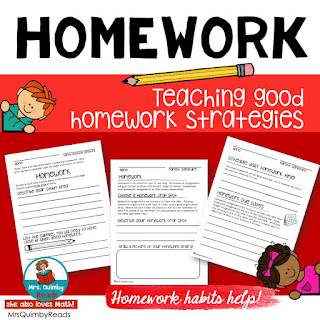
Improve Homework Assignments!    Teach good habits and strategies. This one homework assignment at the beginning of the school year will improve all future homework assignments. Teach responsibility and good homework habits. Perfect for a first day of school activity.

Students will write about their homework assignments and their responsibility to complete all assignments well and on time.

1. Describe your Study Area

2. List the Supplies You Will Need

3. Choose a homework drop spot

4. Draw a picture of your homework drop spot

5. Schedule daily homework time

6. Write one paragraph about what good homework habits and completing assignments is important

There is also a place for parent/guardian signature so parents are informed about homework assignments for the school year. 

Fall Into Engaging Teaching Resources

FALL into 
Engaging Teaching Resources

Reading children's literature in the classroom and at home is powerful.   Children show a keen interest in the books you read and they become engaged and motivated readers themselves.  Reading to children is proven to improve cognitive development.  Cognitive development is the emergence of the ability to think and understand.  The simple and complex problems presented in children's literature creates a construction of thought processes.  These processes include remembering, decision-making and problem solving.  Children who have a rich and full background of stories and books have many opportunities to practice the skills of information processing, intelligence, reasoning, language development, memory and attention span.  When you read aloud to children, you provide them with a background of knowledge which helps them make sense of the world.  Children see, hear, and read which leads to thinking and more reading.  Talking about books gives this reading process power.  Power to bridge stories to their own lives and make connections to people, places and situations.  Read good books. Talk about good books.  Write about good books.  and you will find that one good book leads to another.

Some books for you to read this fall....


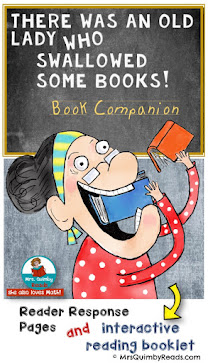
There was an Old Lady who Swallowed Some Books
Book Companion for Old Lady

teaching resources, writing prompts
In November - Book Companion
Teaching literacy with There Was An Old Lady Who Swallowed Some Books, by Lucille Colandro. Make an interactive reading booklet which provides the opportunity to retell the story, read for fluency and talk about books and reading at home. Over 30 pages to use with this fun book that children love. Talk about make-believe and fiction. Silly and absurd! 
Enjoy good books!
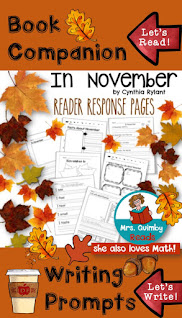
         In November by Cynthia Rylant...Read. Write. Do. Learn. These reader response pages will engage primary readers in literacy skills after reading this wonderful picture book about November. 16 pages for reader response and writing prompts that give the opportunity to write about this book and the author’s message. 


   Pete the Cat Checks Out the Library
     Pete the Cat- Book Companion


Engage your students with these reader response pages for this wonderful book, Pete the Cat Checks Out the Library by James Dean. Students will answer comprehension questions about the book, complete word work, color and write and learn how to do a book talk.

"Sharing a book that helps a child to form a habit of reading and makes reading an enjoyable activity that one engages in often is a good beginning for teaching language arts." CQ


Hallway behavior, elementary grades, teacher resources
Hallway Behavior Sign for Classroom

Find this Hall Sign HERE

Post this sign at your doorway and your students will be ready for hallway behavior. It reads: H- hands at your side. A - all eyes forward. L - Lips zipped L - Low speed. Quick and Easy! Display it! and Refer to it often! There are 8 different designs so you have a choice of color and graphics.  This classroom sign is a great way to remind your class of your expectations while passing through the hallways at school. Located and displayed at your doorway, this sign will be a quick reminder each time your class lines up. Also easy for you to refer to on a daily basis. Bold and bright print - 8 designs! You will love this easy way to line up your students.

Spelling Practice, back to school

Find all the many spelling pages HERESpelling Practice with Smiling Faces and Good Results! These pages provide practice in reading, writing, spelling and learning new spelling words. These pages can be used with ANY word list. 37 pages! These pages can easily be used for small groups, independent work and homeschoolers. Assign for distance learning and school-at-home.Students will have a variety of ways to write, read and learn their spelling words. These work perfectly for independent seat work, small group instruction, review, reinforcement, school at home or distance learning and homework. These pages can be used with ANY word list and are perfect as an independent work packet for spelling.

Back-to-School Writing Prompts
Back to School Writing Prompts
Teaching Resources, following directions, primary grades
Learning to Follow Directions - Listen and Do


Everybody loves these Listen and Do Pages - You can get them HERE  Improve students' listening skills with these 'listen, draw, follow direction' pages. Students listen, then follow the directions by what they heard. Teacher direction pages are included.   These PRINTABLES are no prep for the teacher and provide practice for an important school skill...listening.

Spring is Here - Children's Literature in the Classroom


Reading Children's Literature Everyday is an important event in every elementary classroom.  There is a long list of reasons why reading aloud to children is beneficial to their reading achievement.  I cite 3 of the many just below:

1.   Reading aloud promotes a positive attitude toward reading and books.

 2.  Reading aloud helps to promote a longer attention span.  

 3.  Reading aloud exposes children to complex language, which will help the children in all areas of their development, especially their reading development.  


 And here are some book choices for your reading pleasure now that 
Spring is Here !


Mole wakes up after his long hibernation and can smell Spring in the air, however Bear is still asleep having his long winter nap.  Time to wake up, Bear!  Mole wants Bear to celebrate the wonderful event.  He has quite a bit of trouble getting Bear to wake up, so he decides to gather eggs, milk a cow, churn some butter and bake some muffins!  And this seems to be exactly what Bear needed to wake up from his hibernation !  This is an engaging and awesome story about Spring and friendship. 
It is perfect for beginning readers.

The Wind In the Willows, Children's Literature


The Wind In the Willows 

by Kenneth Grahame

The Wind In the Willows was published in 1908 in England and 1909 in America.  Meet the characters... Mole, Rat, Badger and Toad.  Characters show numerous examples of good virtues.  Forgiveness, compassion, generosity, humility and hospitality to name a few.  I always encourage my students to read books that "make them smarter or nicer".  This book creates a natural springboard to discover and discuss the many virtues that make the world a better place to live in.  Toad can be a bit arrogant but he is able to learn to become more humble by the end of the story. Of course, he finds friendship to help him to this end. 

Here are some great quotes from the book:

"Beyond the Wild Wood comes the Wide World."

"It takes all sorts to make a world."

"As he looked, he lived; and still, as he lived, he wondered."

"As one wakened suddenly from a beautiful dream."

"I have the gift of conversation."

"There is nothing--absolutely nothing - half so much worth doing as simply messing about in boats."

"We chaff, we sparkle, we tell witty stories."

"Here today, up and off to somewhere else tomorrow!"

"A horizon that's always changing!"

"Everything seems asleep, and yet going on all the time."


When Spring Comes - Kevin Henkes
When Spring Comes - Book Companion

 When Spring Comes , by Kevin Henkes, tells the story of all the magical happenings when Spring arrives. Your students will love writing about this book.  Grab your book companion for this book HERE.  


Teaching Literacy and Life Lessons
with Children's Literature

Children's Literature for St. Patrick's Day

Happy St. Patrick's Day


Reading good books that teach literacy and life lessons on 
St. Patrick's Day and everyday.  Read on to find out about Eve Bunting's entertaining book about what exactly leprechauns do.  Frolic through the Irish countryside with a few leprechauns.  Oh what fun! 
rainbows, St.Patrick's Day


Read  That's What Leprechauns Do by Eve Bunting to entertain your students with yet another great choice from the world of Children's Literature.  What exactly do Leprechauns do?  Illustrations by Emily Arnold McCully create the whimsy and jest that are perfect for this story. 

Meet Ari, Col, and Boo as they set out to find their pot of gold at the end of the rainbow ! But like most leprechauns, they find themselves creating quite a bit of mischief along the way. Their antics entertain and delight the reader because, in true leprechaun style,  this trio creates havoc as they frolic the beautiful Irish countryside.   


I created these pages with SPACE for the child writer... so important for writing... creativity and voice.  Young writers will surprise you with their writing if you give them creative space to write their thoughts.  It's more fun for them and it creates 
so many teachable moments for YOU!  
Click the link below to get your book companion for this fun book to read on St. Patrick's Day. 

That's What Leprechauns Do, Book Companion
That's What Leprechauns Do - Book Companion


Easy and fun to do for the Little Learners... You will need green peppers, paint and white paper! 


FREE Reading Resource for responding to your favorite St. Patrick's Day story.  
Free Resource for St. Patrick's Day 4-Square

Find more resources at  MrsQuimbyReads.com  


Enjoy your reading day!


reading resources, MrsQuimbyReads


Reading Literature in the Classroom


The Old Tree by Ruth Brown
The Old Tree - Book Companion

The Old Tree
 is perfect for reading aloud to PreK-1.  This book teaches young readers the importance of working together to save our environment.  Ruth Brown presents Pigeon Post delivering the mail to The Old Tree asking "Why is there a big X on the tree?"  No one seems to know until Captain Crow peers into his telescope and learns what is about to happen... PANDEMONIUM!  first .... and then the animals and birds work together to save their beautiful home. 

It's the most beautiful tree I have seen this year in any picture book.  The characters are likable and lovable... even Mr. Woodpecker who makes a racket remodeling his home ... making several renovations and new additions!  Professor Owl seems to get a headache and not only because of noisy Mr. Woodpecker but also because of some other charming characters in this story.  If you love birds

Presidents' Day Teaching Resources and Writing Prompts

presidents day writing prompts
Writing prompts, graphic organizers and cut & paste for Presidents’ Day.
 
Three easy-to-read reading passages about 3 famous Presidents; Washington, Jefferson and Lincoln. Also, included is a cover page so your students can make a ‘Presidents’ Day’ Folder.
Writing Prompts and Graphic Organizers Include:
• Reading Passages
• Three Facts about Each President
• Was, Had, Wanted
• Washington was a great President because
• Lincoln was a great President because
• Jefferson was a great President because
• Compare and Contrast [Washington and Lincoln]
• If I were President, I would
• The President’s job is important because
• Lincoln’s Log Cabin [cut and paste] for primary readers
• Famous Buildings in Washington, D.C. [cut and paste]
• A famous Quote from each President [Washington, Lincoln, Jefferson]
• Cover for Student Folder


21 total printable pages to use to learn and write about these three presidents, Washington, Lincoln and Jefferson.
Thank you for previewing this teaching resource.
Find this teaching resources for Presidents' Day HERE